Toyo Drive
China’s children’s ride-on vehicle market includes electric cars, motorcycles, scooters, go-karts, tractors, ATVs, and other battery-powered toys. Each type creates different safety risks. Speed, weight, seating capacity, battery chemistry, remote-control functions, and intended age all affect compliance requirements.
The U.S. Consumer Product Safety Commission estimated 231,270 toy-related injuries treated in emergency departments during 2023. Its Toy-Related Injuries and Deaths report shows why braking, stability, small parts, charging systems, and protective design deserve close attention. Market research from Grand View Research also identifies battery-powered ride-on toys as a growing segment within the global ride-on toys market. Growth increases responsibility. It does not make compliance optional.
So, what certifications should children's ride-on vehicles have? The answer depends on the destination market and product classification. In China, manufacturers may need CCC certification where the product falls within the applicable compulsory product catalogue. Relevant GB standards can also address toy safety, electrical safety, battery protection, and electromagnetic compatibility. Export models may require EN 71 and EN IEC 62115 testing for Europe, ASTM F963 and CPSIA compliance for the United States, or equivalent requirements elsewhere. UN 38.3 testing may apply to lithium-battery transport, but it is not a complete product safety approval.
This guide examines ten major vehicle types and connects each one with practical certification checks. A certificate alone proves little. Factory inspections, traceable test reports, guarded moving parts, reliable chargers, and clear age warnings matter too. The boundaries are not always tidy. Product classification can change after a small design modification. That detail is easy to miss. Manufacturers should confirm requirements with accredited laboratories and current authorities before shipment.
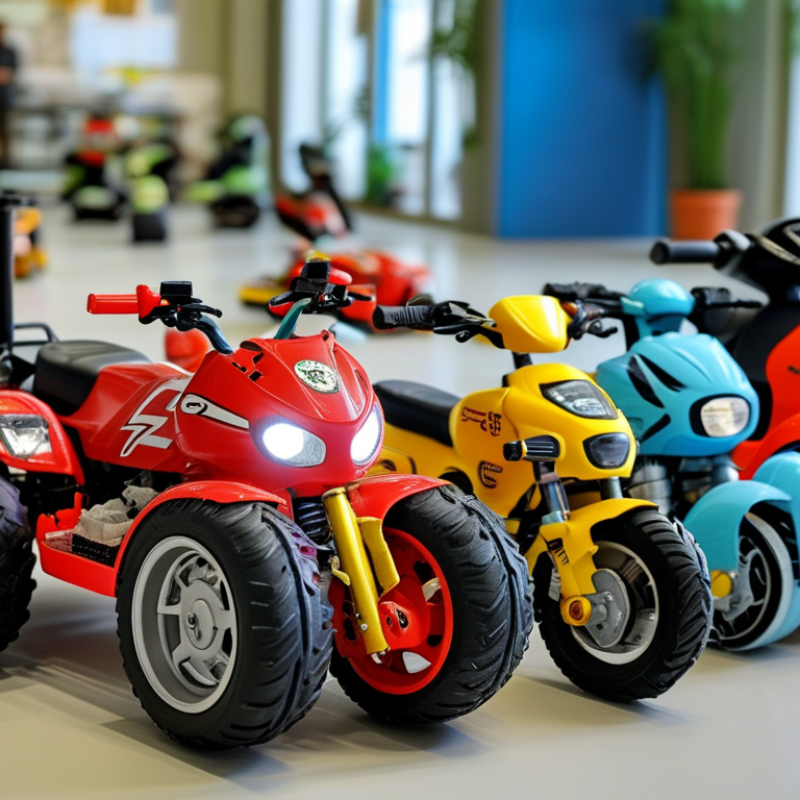
Under GB 6675, China does not publish an official “top 10” list of ride-on vehicle types. The standard focuses on toy safety, foreseeable use, structure, materials, and age suitability. In practical product reviews, ten common forms are push ride-on cars, pedal cars, battery-powered cars, electric motorcycles, electric scooters, ride-on tractors, construction vehicles, go-karts, ride-on trains, and animal-shaped ride-ons. Their appearance differs, but each may fall within the ride-on toy category when children sit, stand, or move on the product.
Certification depends on the product’s actual function, power system, and classification. A battery-powered vehicle may require applicable China Compulsory Certification procedures for toys, while a simple push car may follow different compliance routes. GB 6675 testing usually examines small parts, sharp edges, stability, mechanical hazards, materials, flammability, and electrical safety where relevant. Age grading matters. A fast-looking vehicle is not automatically suitable for older children.
In my testing experience, stability is often underestimated. A wide wheelbase helps, but it does not solve every tipping risk. Battery compartments also deserve close inspection. They should resist easy opening and protect children from accessible parts. Packaging warnings, instructions, and Chinese labeling must match the tested design. One detail is easy to miss: changing the motor, seat, battery, or remote-control system can affect the original assessment. The product may look unchanged, but its compliance status may not be.
China’s ride-on vehicle market is expanding with outdoor toy demand. Grand View Research’s 2024 report forecasts about 7.2% annual growth through 2030. Compliance cannot be treated as a final paperwork step. A ride-on car, motorcycle, tractor, or quad may fall under China’s CCC system when classified as an electric toy. Confirm the exact CCC catalog category before production. Classification errors remain common.
GB 6675 controls general toy safety, including sharp edges, small parts, mechanical hazards, and chemical migration.
GB 19865 focuses on electric toy safety, such as overheating, abnormal operation, battery charging, and insulation.
EMC testing checks unwanted emissions and resistance to interference. Test the complete system, including the charger, remote controller, wiring, and motor.
A passing sample may fail after a battery or controller change. This is where many supply chains become careless. CCC documentation must match the tested construction and factory information.
Tips:
Freeze the bill of materials early. Keep Chinese test reports, drawings, labels, and manuals consistent. Ask a CNAS-accredited laboratory to confirm applicable standards and current editions.
The China Toy Association’s 2024 industry reporting also highlights stronger attention to product quality and export readiness. Yet reports do not replace technical judgment.
A plastic ride-on vehicle with a removable battery may need a different review from a fixed-battery model.
A reliable certification plan starts with the vehicle’s design, speed, age label, and intended market. Ride-on cars usually require toy safety testing, electrical safety checks, battery documentation, and electromagnetic compatibility testing. In China, classification may determine whether CCC or other regulatory requirements apply. Export markets often request CE documentation for Europe, while the United States commonly expects ASTM F963 and CPSIA compliance. Requirements can change when remote controls, lithium batteries, or charging adapters are included.
ATVs need closer attention because their shape suggests outdoor driving and higher risk. Review speed limits, stability, braking, steering, protective guards, and warning labels. Tractors may fall under ride-on toy requirements, but working attachments can create extra mechanical hazards. Ride-on bikes need careful testing for balance, chain protection, wheels, batteries, and charger safety. Smaller scooters, go-karts, trucks, excavators, and fire engines still need type-specific risk assessments. Similar appearance does not mean identical certification.
Tips: Build a type-by-type matrix before production. List age group, speed, power source, battery chemistry, charger, and destination country. Keep test reports, drawings, labels, and supplier declarations together. A common mistake is testing the vehicle but forgetting the charger. Another is copying a certificate from a similar model. That shortcut can fail during customs review or market surveillance. Requirements are not always perfectly clear, so confirm classification with an accredited laboratory before mass production.
China Top 10 Kids Ride On Vehicle Types Certifications Needed
Exporting children’s ride-on cars, motorcycles, tractors, and electric scooters requires more than one test report. The correct route depends on voltage, speed, remote control functions, age grading, and intended market. For European sales, EN 71 evaluates toy safety, including mechanical hazards, flammability, and chemical migration. EN IEC 62115 focuses on electrical toys, such as wiring, motors, chargers, and overheating risks.
CE marking is not a single certificate. It is a manufacturer’s declaration that the product meets applicable European requirements. A responsible compliance file should include risk assessment, test reports, technical drawings, user instructions, and traceable production records. Batteries and chargers may require additional evaluation under relevant electrical, electromagnetic, or chemical rules. Details matter.
For the United States, ASTM F963 is the main children’s toy safety standard. It covers materials, sharp edges, small parts, sound, and other foreseeable hazards. A third-party laboratory can support testing, but the importer or manufacturer remains responsible for compliance documentation. I have seen teams test the vehicle but overlook the remote control, charger, or replacement battery. That creates avoidable gaps. Check every accessible component. Recheck the design after changing speed settings, plastics, or wiring. A test report is useful, but it is not proof that every production batch remains identical.
| Kids Ride-On Vehicle Type | Typical Product Profile | European Union Export Route | United States Export Route | Core Technical Evidence to Prepare | Important Classification Notes |
|---|---|---|---|---|---|
|
1. Battery-Powered Ride-On Cars
Electric
Indoor/Outdoor
|
Usually designed for children approximately 3–8 years old, with a low-voltage rechargeable battery and limited speed. |
Generally applicable: Toy Safety Directive 2009/48/EC, CE marking, and harmonised toy safety requirements including
EN 71-1, EN 71-2, EN 71-3, and
EN IEC 62115 for electrical toys.
Also assess: EMC requirements and RoHS obligations where applicable to the product configuration. |
Generally applicable: ASTM F963 requirements as incorporated into U.S. toy regulations, together with applicable
CPSIA requirements and relevant CPSC rules.
Electrical, battery, charger, lead, phthalate, labeling, tracking-label, and age-grading requirements must be reviewed separately. |
Risk assessment; battery and charger specifications; electrical safety test report; mechanical and physical test report; flammability test; migration-of-elements test; EMC assessment where applicable; technical file; Declaration of Conformity. | CE is a manufacturer’s conformity marking, not a standalone certificate. A notified body may be needed when the applicable conformity-assessment route cannot rely solely on internal production control. |
|
2. Battery-Powered SUV and Jeep-Style Toys
Electric
Multi-seat
|
Larger ride-on bodies, often with two seats, remote parental control, lights, sound, and multiple driving modes. |
Generally applicable: CE route under the Toy Safety Directive, with
EN 71-1, EN 71-2, EN 71-3, and
EN IEC 62115.
Remote-control functions, charging systems, wiring, accessible moving parts, stability, and foreseeable misuse require specific evaluation. |
Generally applicable: ASTM F963 and CPSIA-related obligations.
Products with wireless remote-control functions may require an additional review under applicable FCC equipment authorization rules, depending on the radio technology. |
Stability and ride-over testing; restraint and seating assessment; pinch, shear, and entrapment review; battery/charger documentation; radio-frequency documentation where applicable; product and packaging labeling. | The product should not be marketed as a real motor vehicle if it is intended and designed as a toy. Speed, age grading, dimensions, and intended use can affect regulatory classification. |
|
3. Electric Ride-On Motorcycles and Tricycles
Electric
Two/Three Wheel
|
Low-speed children’s motorcycles or tricycles with rechargeable batteries, often using a twist grip or push-button control. |
Generally applicable: CE under the Toy Safety Directive, including
EN 71-1, EN 71-2, EN 71-3, and
EN IEC 62115.
Particular attention is required for stability, steering, braking, footrests, rotating wheels, battery access, and accidental activation. |
Generally applicable: ASTM F963, CPSIA, and applicable CPSC requirements.
The product must be assessed for stability, impact hazards, accessible moving parts, electrical hazards, battery safety, and age-appropriate use. |
Steering and stability test results; braking or stopping assessment; wheel and axle strength evidence; electrical test report; battery and charger safety data; chemical and flammability reports. | If the product is designed for public-road use, higher speeds, or adult operation, it may fall outside the ordinary toy route and require a separate vehicle or consumer-product compliance assessment. |
|
4. Electric Quad and ATV-Style Ride-On Toys
Electric
Off-Road Toy
|
Four-wheel toy vehicles intended for controlled recreational use, commonly with low speed and simplified controls. |
Generally applicable when classified as a toy: CE, EN 71-1, EN 71-2, EN 71-3, and EN IEC 62115.
A detailed risk assessment should cover rollover, stability, impact, steering control, battery enclosure, and foreseeable off-road misuse. |
Generally applicable when classified as a toy: ASTM F963, CPSIA, and relevant CPSC requirements.
Marketing language, maximum speed, rider weight, and intended terrain can influence whether additional non-toy requirements need review. |
Dynamic stability assessment; structural and wheel testing; steering and braking evidence; battery and charger reports; age grading; warnings and instructions; production-control records. | “ATV” terminology can create classification risk. The product should be reviewed carefully if it resembles a recreational vehicle rather than a conventional low-speed toy. |
|
5. Electric Ride-On Go-Karts
Electric
Low-Slung
|
Low-speed kart-style vehicles with a seat, steering wheel, accelerator, battery, and protective bodywork. |
Generally applicable for toy versions: CE under the Toy Safety Directive, EN 71-1, EN 71-2, EN 71-3, and EN IEC 62115.
Special evaluation is needed for accessible drive mechanisms, braking distance, rollover, sharp edges, impact zones, and battery overheating. |
Generally applicable for toy versions: ASTM F963, CPSIA, and applicable CPSC requirements.
Test planning should reflect the vehicle’s maximum speed, user weight, surface conditions, and foreseeable collision scenarios. |
Speed and stopping-distance data; stability and structural testing; electrical and battery reports; mechanical hazard assessment; warnings; instructions; traceability documentation. | Products marketed for racing, high speed, or use by older/heavier riders may require a classification review beyond the ordinary children’s toy framework. |
|
6. Electric Ride-On Tractors and Construction Vehicles
Electric
Imaginative Play
|
Tractor, excavator, loader, or dump-truck styling, sometimes including a non-powered shovel, bucket, trailer, or tipping feature. |
Generally applicable: CE, EN 71-1, EN 71-2, EN 71-3, and EN IEC 62115 for battery-powered toy versions.
Moving buckets, tipping beds, trailers, and hinges require a dedicated pinch, crush, shear, and entrapment assessment. |
Generally applicable: ASTM F963, CPSIA, and applicable CPSC requirements.
Functional accessories should be assessed as part of the complete toy, including their structural strength and accessible moving parts. |
Mechanical strength tests; accessory attachment assessment; pinch and entrapment review; stability testing; electrical and chemical test reports; age-grade and warning review. | Non-powered accessories may still affect the overall toy safety assessment. A decorative feature that can support a child’s weight should be treated as a foreseeable load-bearing component. |
|
7. Electric Ride-On Trains and Locomotives
Electric
Track or Free-Ride
|
Battery-powered locomotive-style toys, with or without detachable carriages, intended for private or controlled play areas. |
Generally applicable: CE, EN 71-1, EN 71-2, EN 71-3, and EN IEC 62115 for toy products.
Couplings, carriages, accessible wheels, track interaction, stability, and emergency stopping should be included in the risk assessment. |
Generally applicable: ASTM F963, CPSIA, and applicable CPSC requirements.
Battery systems, charging, detachable parts, ride-on load limits, and warnings must be evaluated for the complete train configuration. |
Coupling and load testing; stability and derailment assessment where applicable; wheel and axle tests; electrical and battery reports; instructions and warnings. | A train intended for commercial amusement rides or public passenger service is not automatically covered by the ordinary toy route and requires a separate regulatory review. |
|
8. Electric Ride-On Scooters and Balance Vehicles
Electric
Single Rider
|
Small, low-speed children’s ride-on products using a standing platform or seated balance design. |
Classification-dependent: toy versions may follow the CE toy route with EN 71-1, EN 71-2, EN 71-3, and EN IEC 62115.
If the product is intended for road use, higher speeds, or general personal transport, other EU legislation and standards may apply instead of or in addition to the toy route. |
Classification-dependent: ASTM F963 may apply when the product is a children’s toy. Products intended as personal transportation devices may require a different federal, state, or local compliance analysis. | Intended-use and age-grade analysis; speed and braking data; stability assessment; battery and charger documentation; electrical and mechanical test reports; labeling and instructions. | This category has a high classification risk. Product claims, maximum speed, rider age, road-use capability, and design features should be reviewed before selecting the export route. |
|
9. Pedal-Powered Cars and Pedal Karts
Non-Electric
Pedal Drive
|
Child-operated vehicles powered by pedals, with no motor or rechargeable battery. |
Generally applicable as toys: CE under the Toy Safety Directive, including the relevant mechanical and physical safety requirements of EN 71-1, flammability requirements of EN 71-2, and migration-of-elements requirements of EN 71-3.
EN IEC 62115 is generally not applicable when the product has no electrical function. |
Generally applicable: ASTM F963, CPSIA, and applicable CPSC requirements.
The assessment should cover pedals, crank mechanisms, wheels, steering, stability, sharp edges, small parts, and structural strength. |
Mechanical and physical test report; structural-load evidence; stability and steering assessment; material and coating test results; labeling; age grading; instructions. | Adding lights, sound modules, batteries, or an electric assist function can introduce additional electrical and battery-related requirements. |
|
10. Ride-On Animals and Rocking Vehicles
Manual or Electric
Indoor Play
|
Animal-shaped ride-ons, rocking horses with wheels, or motorized rocking vehicles designed for seated play. |
Manual versions: CE route generally based on EN 71-1, EN 71-2, and EN 71-3.
Battery-powered versions: add EN IEC 62115 and evaluate electrical, battery, charging, and accessible moving-part hazards. |
Generally applicable: ASTM F963 and CPSIA requirements.
Special attention should be given to tipping, rocking amplitude, wheels, handles, horns, eyes, tails, stuffing, seams, and detachable decorative parts. |
Stability and tip-over assessment; mechanical strength testing; small-parts testing; flammability and chemical testing; electrical report if powered; age-grade and warning review. | Soft-filled or textile components may require additional material and flammability evaluation. The product’s actual play pattern, not only its appearance, determines the relevant risk assessment. |
China Top 10 Kids Ride On Vehicle Types Certifications Needed
Factory verification should begin with the battery, not the product brochure. Ask for battery cell specifications, protection-board test records, and documented charging cycles. Confirm that the battery matches the vehicle’s voltage and motor load. A mismatched battery can overheat during ordinary play. It happens.
The charger needs separate attention. Check input and output ratings, insulation results, plug configuration, and abnormal-temperature records. Request samples from the same production batch, because laboratory documents may not represent current output. For each ride-on type, record maximum speed under realistic conditions, including rider weight and battery charge level. A claimed speed of five kilometers per hour means little without test conditions. Keep video evidence and signed inspection sheets.
Stability testing should cover turning, braking, slopes, and uneven flooring. Inspect wheel spacing, steering limits, seat restraint points, and anti-tip performance. Children do not ride on clean laboratory surfaces. They encounter carpets, thresholds, and sudden turns. Label records must show age guidance, weight limits, electrical ratings, warnings, and traceable production information. Verify that labels remain readable after rubbing and mild moisture exposure. Applicable certifications may include electrical safety, electromagnetic compatibility, battery transport, chemical-content, and market-specific toy or machinery requirements. Requirements differ by destination. A factory should provide current reports, test standards, sample numbers, and corrective-action records. Missing paperwork is not automatically proof of failure, but it deserves a careful second look.
This chart shows the five common factory verification checkpoints for ten battery-powered kids ride-on vehicle types. A value of 1 means the checkpoint is normally applicable and should be supported by factory test or inspection records. Final certification requirements depend on the destination market, product configuration, age grading, battery system, and applicable regulations.
: Not always. Classification determines whether CCC applies. Confirm the exact category before production. Similar shapes can follow different rules.
GB 6675 covers general toy hazards, including sharp edges and small parts. GB 19865 covers electrical risks, charging, overheating, and insulation.
EMC testing checks unwanted emissions and resistance to interference. Test the complete system, including the charger, remote controller, wiring, and motor.Small changes matter.
Yes. Battery chemistry, charging design, removable batteries, and adapters can change the compliance review. Never test the vehicle alone.
Record vehicle type, age group, speed, power source, battery chemistry, charger, remote functions, and destination market.ATVs need extra care.
Check stability, braking, steering, guards, balance, wheels, chains, and working attachments. A tractor attachment may create additional mechanical hazards.
Keep test reports, drawings, labels, manuals, factory details, and supplier declarations aligned. Freeze the bill of materials early.Documents can drift.
Recheck the product after changing speed settings, plastics, wiring, batteries, controllers, chargers, or remote functions.A passing sample may fail later.
European sales may require EN 71, EN IEC 62115, and CE documentation. United States sales commonly involve ASTM F963 and CPSIA requirements.Exact obligations depend on the market.
No. Production units must match the tested design. Check accessible components, replacement batteries, labels, and charging parts during production.This plan is not foolproof.
China’s kids’ ride-on vehicle market covers a wide range of products, including electric cars, ATVs, tractors, motorcycles, balance bikes, and other battery-powered ride-on toys. This article explains what certifications should children's ride-on vehicles have and how requirements may vary by product design, power system, intended age, and sales destination. For China, the compliance framework generally includes GB 6675 safety requirements, applicable electrical and electromagnetic compatibility testing, and CCC where the product falls within the relevant compulsory category. GB 19865 may also apply to certain electrically operated toys.
For export markets, manufacturers should evaluate testing under EN 71, EN IEC 62115, ASTM F963, and applicable CE conformity procedures. A practical certification matrix helps match each vehicle type with its required safety evaluations. Factory verification is equally important, covering battery and charger safety, speed limits, stability, mechanical construction, warnings, labels, and traceable inspection records. Together, these measures support safer products, clearer documentation, and smoother market access.
