Toyo Drive
Parents often notice the bright colors and small steering wheels first. However, an electric ride-on car is a carefully engineered product. It combines molded plastics, low-voltage electronics, rechargeable batteries, motors, wiring, and mechanical controls. This guide explains how are electric ride-on cars manufactured, from the first design sketch to final inspection. It also considers the practical decisions that affect durability, safety, comfort, and production cost.
Manufacturing usually begins with product research and computer-aided design. Engineers define the car’s weight limit, dimensions, battery location, motor output, and control layout. Designers then create body panels that can be formed consistently through injection molding. Inside the shell, technicians install gearboxes, drive axles, switches, charging ports, circuit boards, and protected cable connections. Workers may use torque-controlled tools when tightening fasteners. This small detail helps reduce loose parts and uneven assembly.
Testing is not a single final step. Teams inspect incoming materials, examine molded panels, and check electrical connections during assembly. Completed vehicles may undergo braking, steering, charging, endurance, and stability tests. Test records provide useful evidence, but they do not guarantee perfect performance in every home. That limitation deserves honest attention. Dust, rough surfaces, incorrect charging, or careless storage can still shorten product life. Reliable manufacturers therefore provide clear instructions, traceable quality checks, and responsive after-sales support. The following outline examines each manufacturing stage, while recognizing that better designs still require continuous review and real-world feedback.
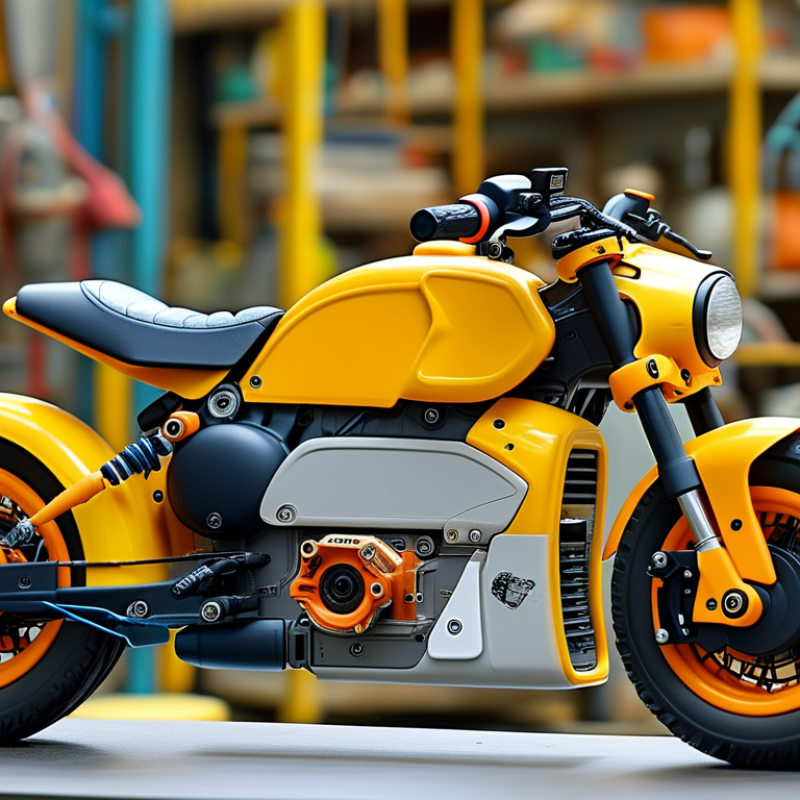
Manufacturing begins with a child-centered risk assessment, not a decorative sketch. Engineers define age range, user height, maximum load, speed, terrain, and expected riding duration. A ride-on car must remain stable during sudden steering, uneven floors, and low-battery conditions. Designers also check seat retention, pedal spacing, steering force, and accessible pinch points. Small fingers find gaps quickly. That detail is easy to underestimate.
The U.S. Consumer Product Safety Commission reported 145,500 emergency-department-treated toy-related injuries involving children under 14 in 2022. This figure covers all toys, but it reinforces careful risk control for powered products. ASTM F963-23 addresses mechanical hazards, sharp points, structural strength, and battery-related requirements for toys in the United States. Engineers commonly combine these requirements with ISO 12100 risk-assessment methods. Testing should include overload trials, blocked-wheel conditions, braking on slopes, and repeated impact cycles.
Battery selection needs equal attention. The enclosure should resist incorrect charging, vibration, moisture, and cable abrasion. Protection circuits must manage overcharge, over-discharge, short circuits, and abnormal temperature rise. Production teams should record torque values, weld quality, charger output, and final functional results. Traceable records support reliable quality decisions. Yet no checklist is perfect. A quiet motor may hide excessive gear stress, while a strong shell may create uncomfortable impact loads. Experienced teams revisit these assumptions after prototype testing and user observation.
How Are Electric Ride On Cars Manufactured?
Material Selection and Component Preparation
Material selection shapes the safety, weight, and feel of an electric ride-on car. Manufacturers commonly choose impact-resistant plastic for the body panels. ABS or polypropylene can provide useful strength without making the vehicle too heavy. A steel frame supports key load points, while aluminum may reduce overall weight. The choice is never purely technical. Cost, temperature changes, surface finish, and production consistency also matter.
Small parts matter. Copper wiring needs flexible insulation and secure terminals. The battery enclosure should resist vibration, moisture, and accidental impact. Engineers check cell compatibility, connector spacing, and heat behavior before assembly. In practical production, incoming materials are measured and visually inspected. A warped panel can create poor alignment later. A loose terminal can cause intermittent power loss.
Component preparation requires steady control. Plastic parts are trimmed, drilled, and checked for sharp edges. Metal brackets are deburred before coating. Motors are tested for noise, rotation, and current demand. Wheels must fit their axles without excessive play. Technicians also verify fastener torque with calibrated tools. These checks reflect common manufacturing experience, not guesswork.
Some choices still need reconsideration. Recycled plastic may reduce waste, but its strength can vary between batches. Extra inspection is necessary. Battery wiring may look simple, yet routing it too tightly can create stress. A careful manufacturer records these findings and adjusts the process when evidence demands it.
Manufacturing an electric ride-on car begins with a rigid, lightweight chassis. Steel tubes or reinforced polymer rails carry axle loads. Engineers check weld penetration, wheel alignment, and battery clearance before painting. The IEA Global EV Outlook 2025 reported more than 17 million electric cars sold worldwide in 2024. That figure supports scalable battery assembly, although it does not directly measure ride-on vehicles.
Body panels are molded, trimmed, and fitted over the chassis. Operators inspect gaps around doors, fenders, and steering openings. Polymer thickness must resist impact without making the vehicle unnecessarily heavy. That balance is easy to miss. The U.S. Consumer Product Safety Commission’s 2023 report estimated 231,000 toy-related emergency-department injuries. This makes rounded edges, stable proportions, and protected joints important assembly targets.
Interior assembly should not be treated as decoration. Seat shells, belts, switches, wiring, and dashboards fit around the battery enclosure. Technicians route wires through protected channels and secure connectors against vibration. Functional tests check braking, steering, charging, and current cut-off behavior. One loose connector can stop everything. Quality teams often sample torque values, but sampling leaves blind spots. More end-of-line testing could improve reliability, although it adds time and cost.
How Are Electric Ride On Cars Manufactured?
Electrical System and Battery Installation
Electrical assembly begins after the frame and drivetrain pass dimensional checks. Technicians route low-voltage wires through protected channels, away from rotating shafts and sharp metal edges. Each connector is locked, labeled, and tested for polarity. Small details matter. A loose terminal can create heat, voltage loss, or sudden motor failure.
Battery selection depends on voltage, capacity, weight, and charging requirements. Lead-acid packs remain practical for low-cost models, while lithium-ion packs offer lower weight and higher energy density. BloombergNEF reported that average lithium-ion battery prices fell to 139 dollars per kilowatt-hour in 2023, but small recreational vehicles still require chemistry-specific safety controls. Installers secure the battery with brackets and cushioning, preventing movement during sudden stops. The fuse should sit close to the positive terminal. This limits damage if a cable becomes trapped.
Manufacturers then inspect charging ports, switches, throttle signals, and motor controllers. They measure charging current and check battery temperature during repeated cycles. The International Energy Agency reported nearly 14 million electric car sales worldwide in 2023, showing how quickly electrical safety expectations are rising across the sector. However, a ride-on car is not a miniature passenger vehicle. Its shorter cables and simpler controls still deserve disciplined testing. In practice, visual inspection alone is not enough. Some assembly teams may overfocus on neat wiring and undercheck connector retention. That is a weakness worth correcting before shipment.
Battery installation begins by securing the battery inside the compartment, connecting the fuse and wiring harness, and checking polarity before the motors and control switches are tested. The chart compares common nominal battery-energy configurations used in electric ride-on cars. Energy is calculated as voltage multiplied by ampere-hours.
Testing, Quality Control, and Final Packaging
Testing begins after assembly, not when the cartons are ready. Technicians inspect wiring, connectors, switches, and battery compartments by hand. Each electric ride-on car receives a controlled power test. The motor must start smoothly without unusual noise or heat. Braking and acceleration are checked on a flat, marked test area. Controls must respond consistently. Small delays can reveal loose connections or software problems.
Quality checks also include measured loading tests. A trained operator verifies stability, wheel alignment, steering movement, and seat attachment. Chargers are examined for correct output and secure cable connections. Inspectors record voltage, operating time, and fault codes for traceability. Random units may receive longer endurance tests. This step often exposes issues that a quick inspection misses. No factory process is flawless. A missed label or incomplete record still needs correction.
Before packaging, workers remove dust and protect exposed surfaces with soft materials. Accessories, manuals, charging equipment, and fasteners are counted against a packing sheet. Foam supports hold the car away from the carton walls. Drop-resistant corners reduce damage during handling. The outer carton receives product details, weight information, and handling marks. A final reviewer checks the carton against the inspection record. Sometimes packaging is redesigned after transport damage appears. That feedback matters. Safety cannot depend on appearance alone.
Manufacturing starts with a rigid, lightweight chassis. Steel tubes or reinforced polymer rails carry axle loads. Technicians check welds, wheel alignment, and battery clearance.
Panels are molded, trimmed, and fitted over the chassis. Workers inspect door, fender, and steering gaps. Rounded edges help reduce injury risks.
Thicker polymer can resist impacts but adds weight. Thin panels may crack more easily. Finding the right balance is not always simple.
Technicians fit the seat, belts, dashboard, switches, and wiring. These parts must fit around the battery enclosure. The interior is functional, not merely decorative.
Wires run through protected channels. They stay away from rotating shafts and sharp edges. Connectors are locked, labeled, and tested for polarity.
Brackets and cushioning prevent battery movement during sudden stops. The fuse should sit close to the positive terminal. A trapped cable can otherwise cause damage.
Lead-acid batteries suit some lower-cost models. Lithium-ion batteries usually reduce weight and provide higher energy density. Each chemistry requires specific safety controls.
Teams test braking, steering, charging, throttle signals, and current cut-off behavior. They also measure charging current and battery temperature. Visual inspection alone is insufficient.
Sampling torque values can leave hidden problems. Neat wiring may receive too much attention. Connector retention deserves stronger testing, even when production takes longer.
It can reveal loose terminals, voltage loss, motor failure, or charging faults. One connector can stop the vehicle. The process is useful, but never perfect.
Understanding how are electric ride-on cars manufactured begins with careful product design and engineering. Manufacturers first define the vehicle’s size, safety features, performance targets, and user requirements before creating detailed plans. Suitable materials are then selected, and components such as plastic panels, metal supports, wheels, seats, motors, wiring, and control units are prepared for assembly. The chassis is built as the foundation, followed by installation of the body structure and interior elements.
Next, the electrical system is connected, including the motor, battery, switches, charging port, and protective controls. Technicians organize and secure the wiring to support reliable operation and user safety. Each vehicle undergoes inspections and functional tests covering movement, steering, braking, charging, battery performance, structural strength, and overall appearance. After quality control is completed, the ride-on car is cleaned, documented, protected with suitable packaging, and prepared for shipment. This organized process helps ensure consistent performance, durability, and safe operation.
